

-
Henrik Håkansson, A Tree with Roots – Installation view
-
Henrik Håkansson, A Tree with Roots – Installation view
-
Henrik Håkansson, A Tree with Roots – Installation view
-
Henrik Håkansson, A Tree with Roots – Installation view
-
Henrik Håkansson, A Tree with Roots – Installation view
-
Henrik Håkansson, A Tree with Roots – Installation view
-
Henrik Håkansson, A Tree with Roots – Installation view

-
Henrik Håkansson, A Tree with Roots – Installation view
-
Henrik Håkansson, A Tree with Roots – Installation view

-
Henrik Håkansson, A Tree with Roots – Installation view
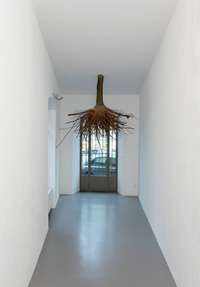
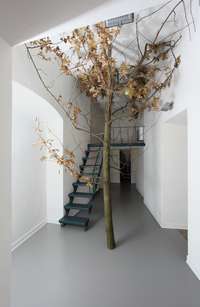
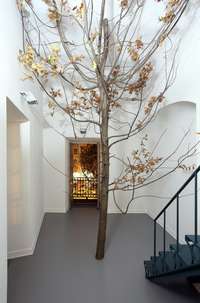
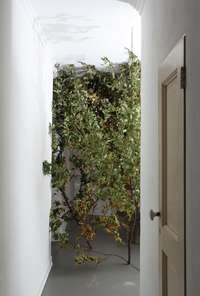
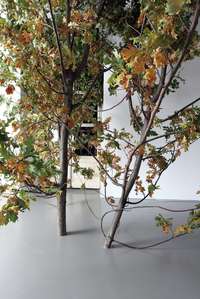
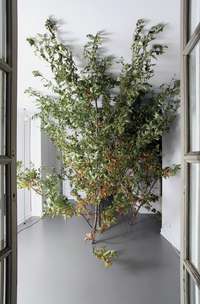
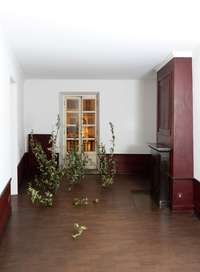
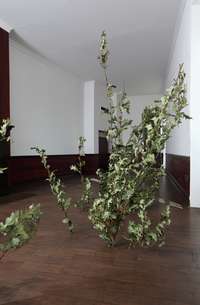
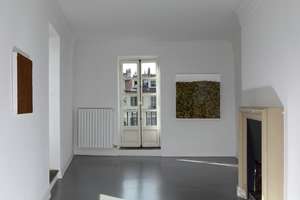
Henrik Håkansson features for his fourth exhibition at Galleria Franco Noero in Torino a multi-layered project which deals with the research of a connection between the historical building of the gallery and its surrounding natural environment, and drags the visitors into a careful and deep observation of Nature which is the core of his research.
Håkanssonʼs work, that combines an interest in the environment of a biologist, an anthropologist and an artist at the same time, is focused on the process of the careful observation of those ʻdaily miraclesʼ that the Nature face us every day, by using combinations of natural elements, technology, everyday life and references to the art history.
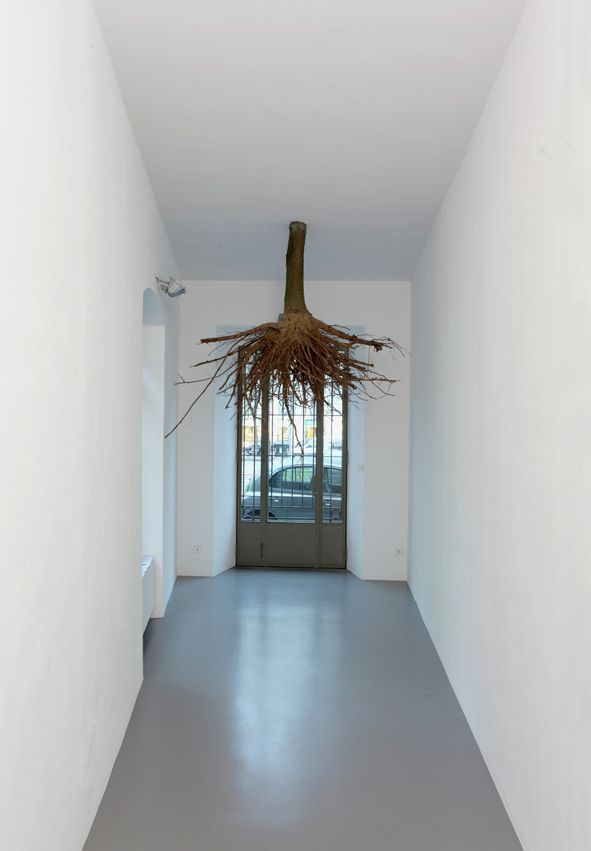
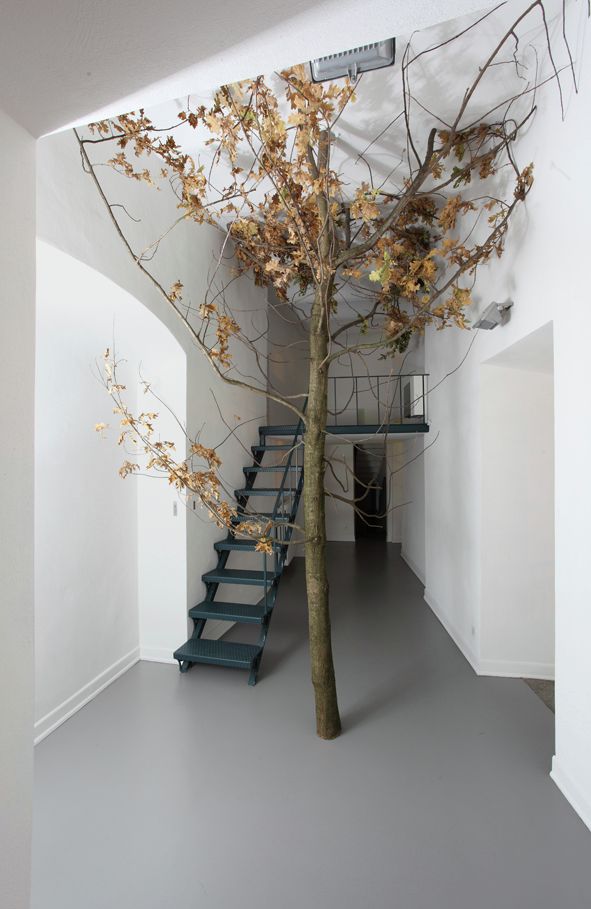
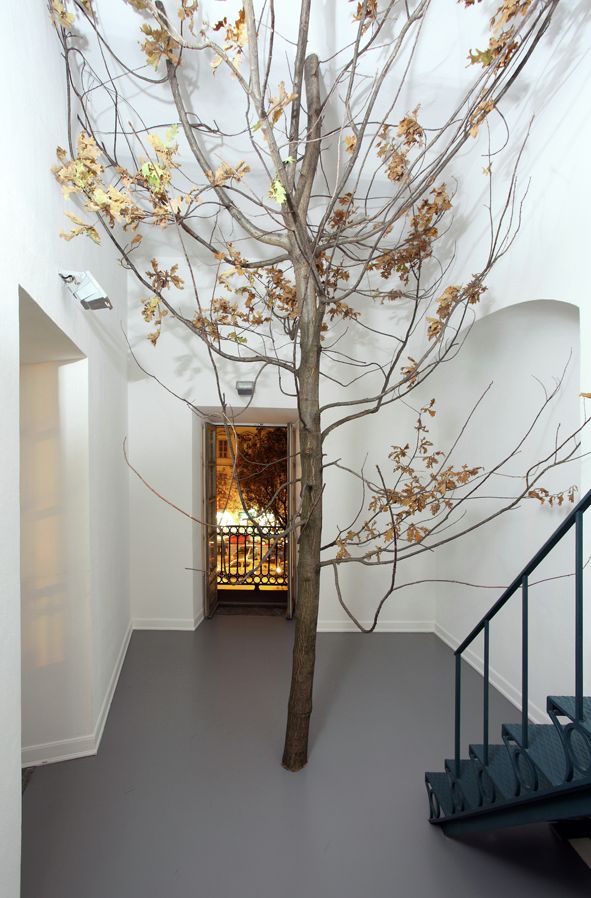
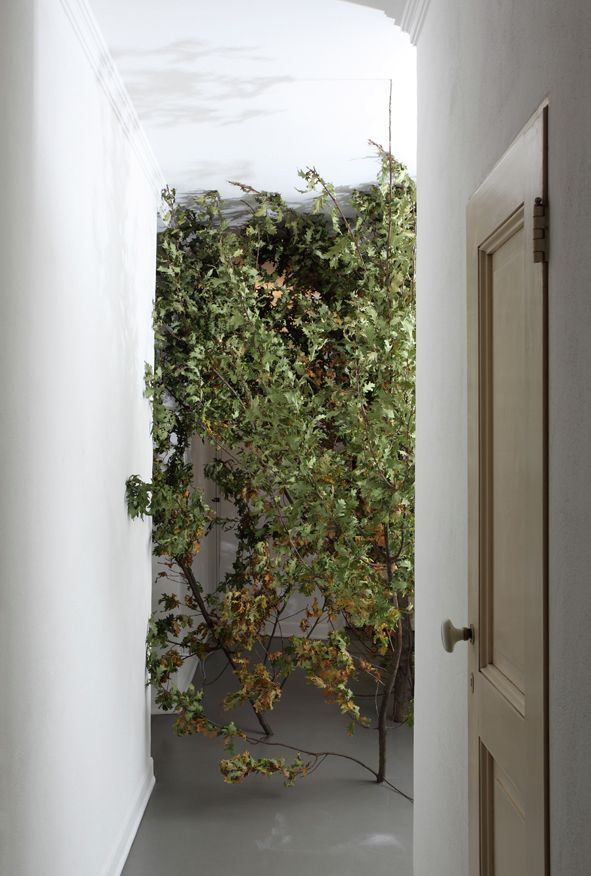
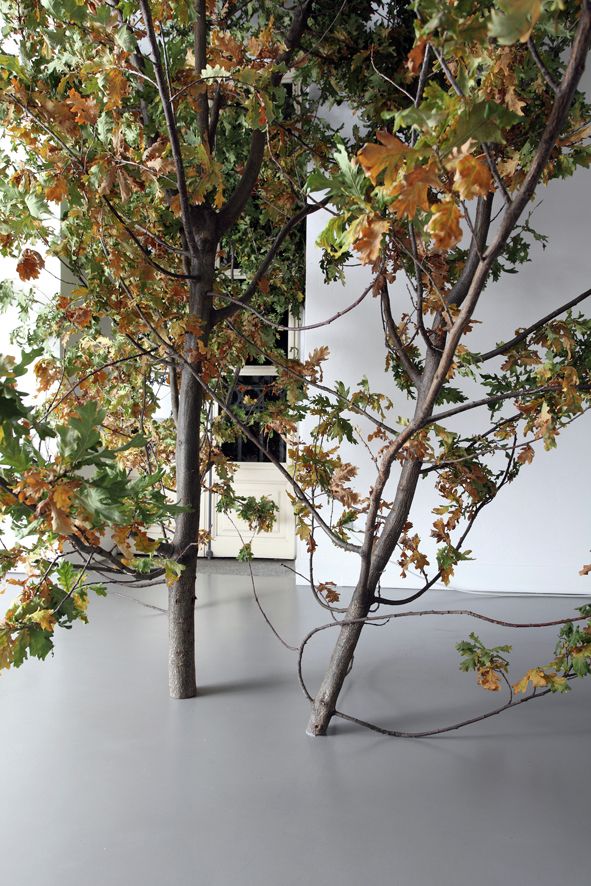
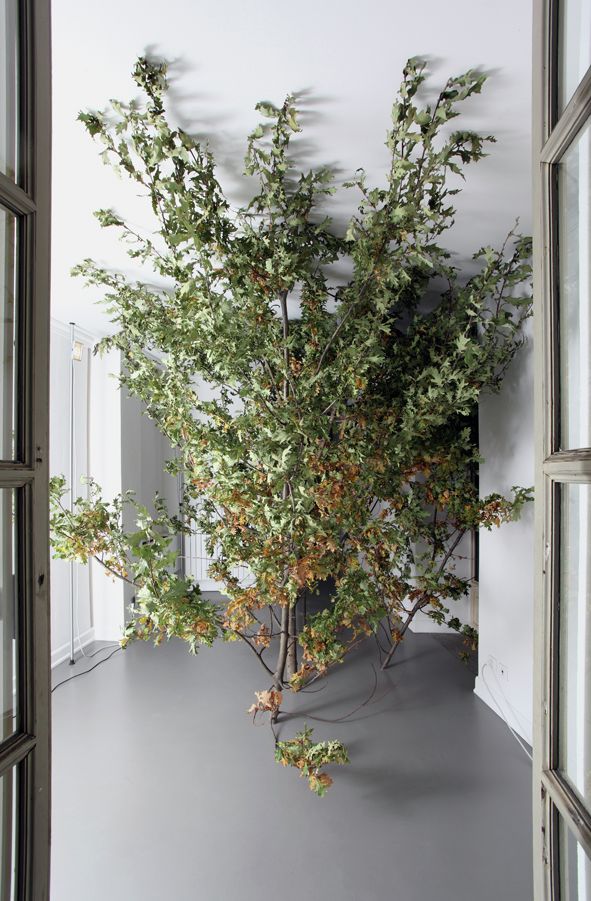
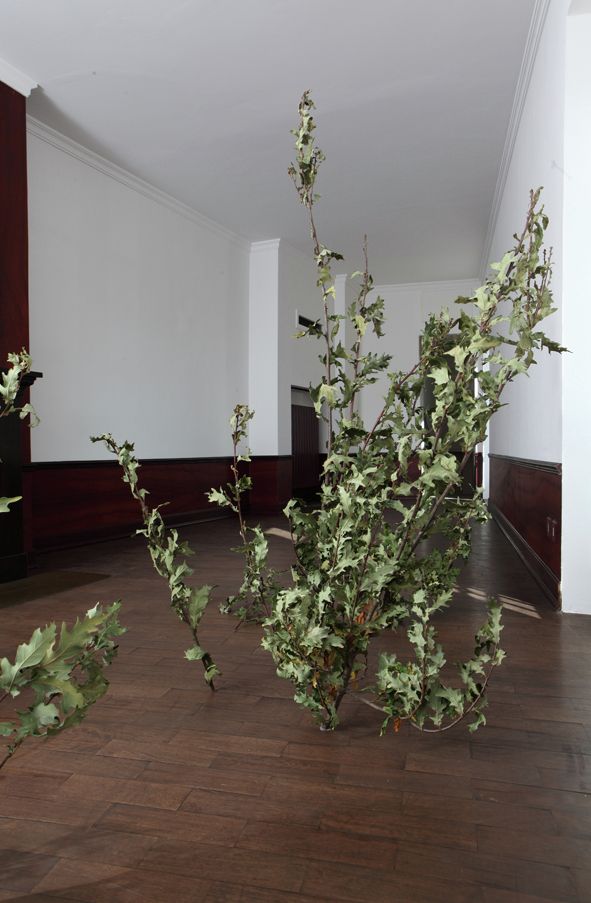
The artist describes his project as follows: ʻSomehow in references to the year of my personal birth in 1968 and the Art movements in Turin at this time, as the greater relation to the symbolic value of The Tree of Life. I seek here a possibility to create a relation to Space and Time. This could be read as one painting of a Tree with roots or a sculpture based on a Tree with roots, quoting Giuseppe Penone who says « Sculpture is a volume, and lives in space, while painting is surface, two-dimensionality. Sculpture is born from the imprint of feet in mud, painting from the imprint of hands - dirty with mud - on the walls of a cave.» But, it can also be regarded as the representation of the Biomass of one specific Tree.
A Tree with Roots consists in an Oak Tree (Querqus rubra) that is moved from the nearby outside, and fitted in the specific building of the Fetta di Polenta and Galleria Franco Noero in Turin. The Tree is dug out, and cut in parts, then relocated within the exhibition space in full. Its general structure is rebuilt within the gallery. The cut and diversion of this Tree is carried out to allow the possibility to rebuild or to storage it as in partsʼ. “When you are tired of staying there you will change your mind!” he shouted. “I will never change my mind,” said my brother, from the branch [of the live oak]. “Iʼll show you, now get down here!” “And I will not come down, ever.” And he kept his word” (from "The Baron in the Trees" by Italo Calvino).
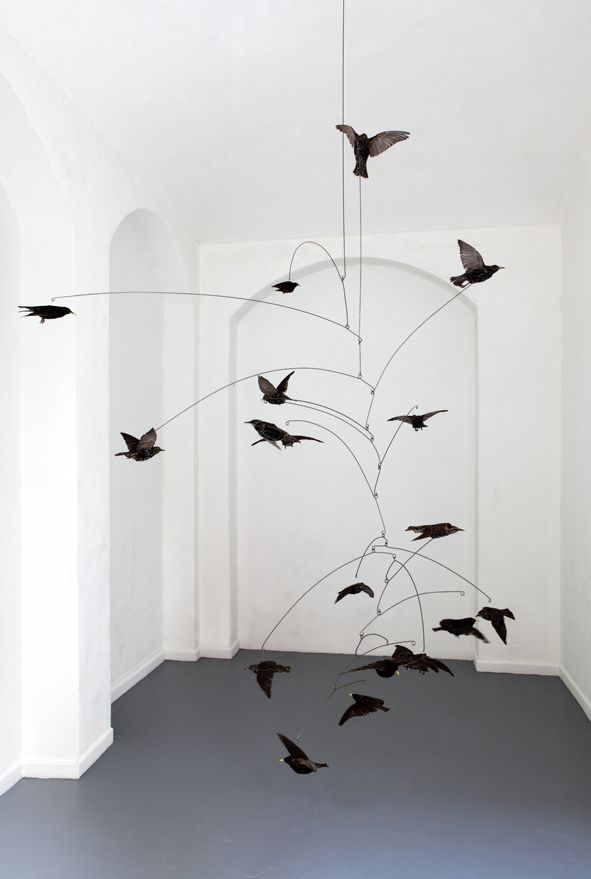
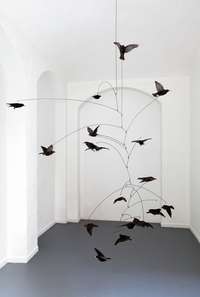
The work exhibited in the Site Specific space of Piazza Santa Giulia 5, is clearly referring to art history, a Mobile ispired by the renown sculptures by Alexander Calder. Håkansson makes a sculpture by replacing the elements of Calderʼs mobiles, stuffed starlings of different origins that are hanging from an iron structure, thus creating a new mobile that is a symbol of the perfect synthesis of the natural balance which is defining any natural event.