

-
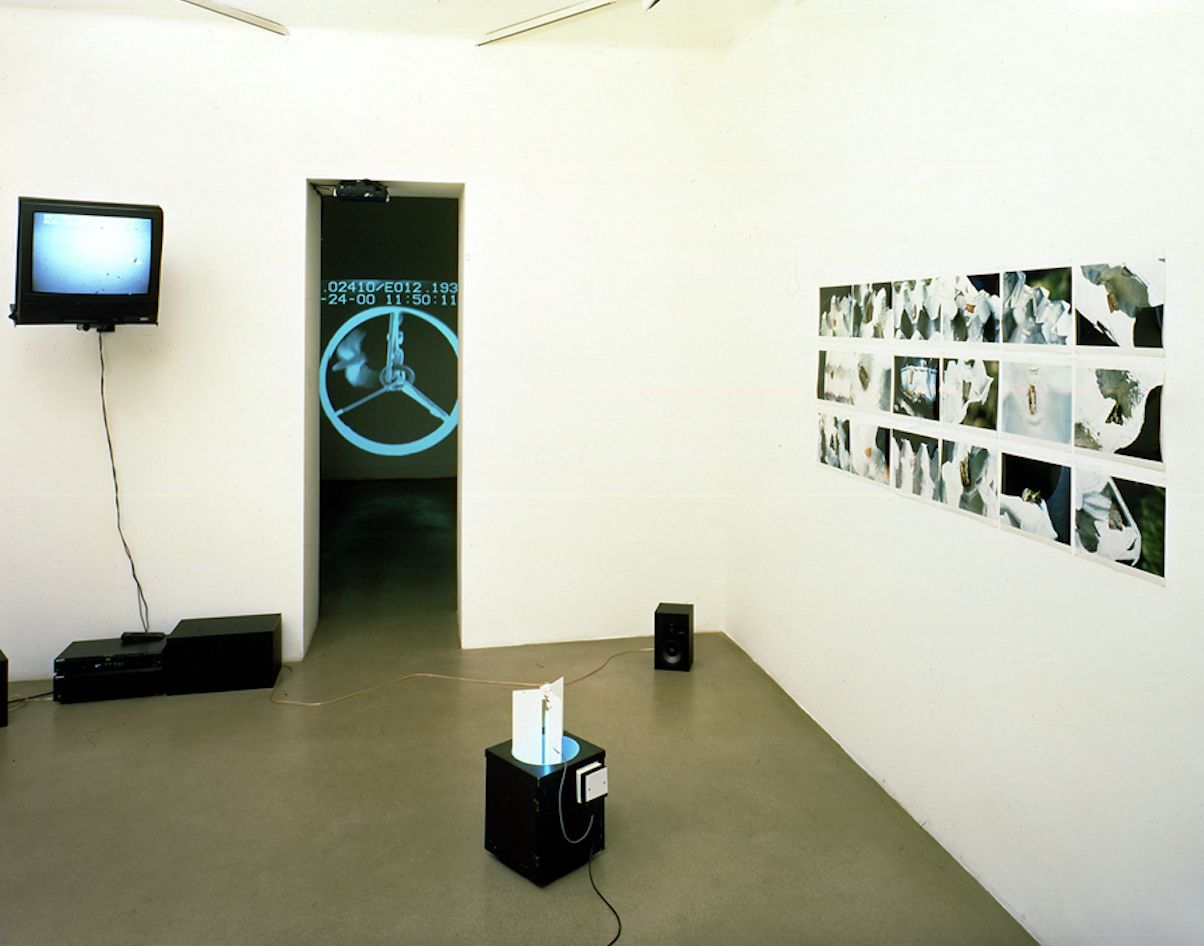
Henrik Håkansson, Henrik Håkansson – Installation view
-
Henrik Håkansson, Henrik Håkansson – Installation view
-
Henrik Håkansson, Henrik Håkansson – Installation view

-
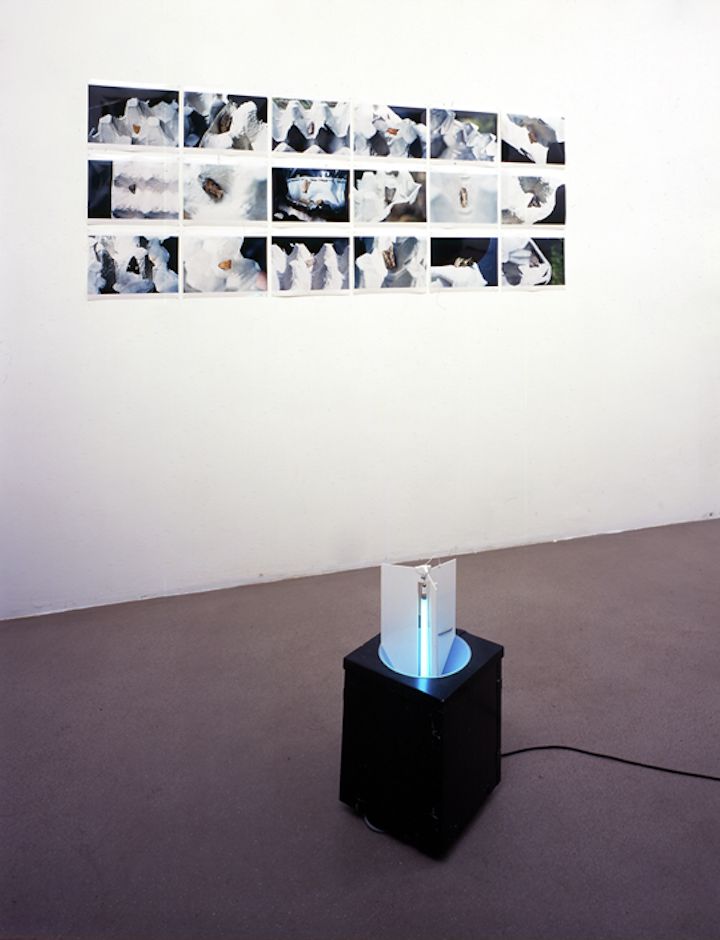
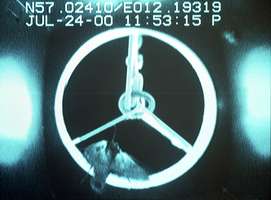
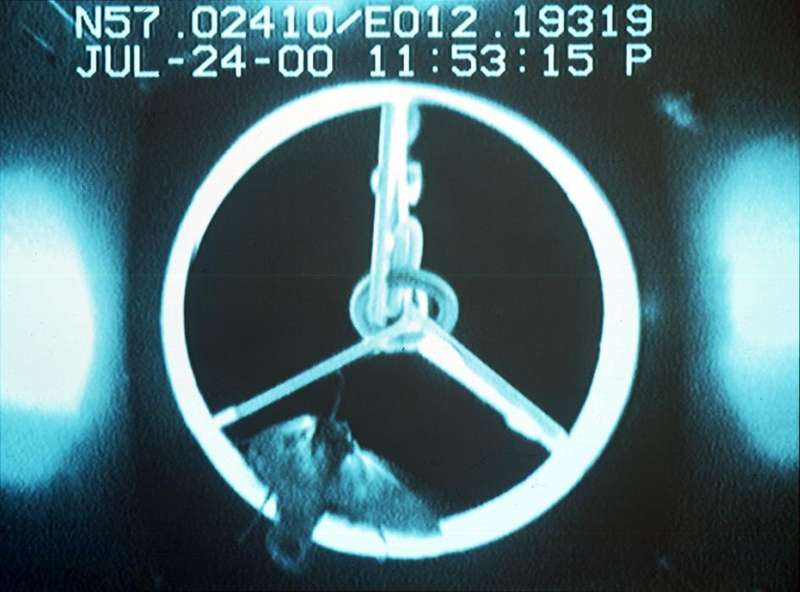
Henrik Håkansson, The Lighttrap, 2000
The way Henrik Håkansson observes the natural environment attemps to reduce the distance between nature and Man, stimulating the viewer to look more attentively at the processes and conditions that govern the natural world and enabling us to discover genuine ʻnatural wondersʼ (Lisa Corrin in The Greenhouse Effect, London, 2000).
Using video cameras and closed circuit surveillance systems, and after meticulous analysis of the local ecosystem, Håkansson records the behaviour of wildlife such as insects, frogs, snakes and bats as well as various plants species in their own natural habitats into which the artist has inserted extraneous elements created by him or alternatively in recreations of those original habitats in a gallery environment.
The documentation of these complex projects involves diagrams and drawings, photographs and videos that add up to an archive: ʻHåkansson makes a record of what he learns from his worksʼ (H. Hirsch Kempf in Henrik Håkansson, Kunsthalle, Basel 1999).
ʻIʼve always been more interested in what is not me, in the non-human, the other - different animals, for instance. In many of my works, I've tried to bridge the gap and create a dialogue between my own human sphere and what is differentʼ (in Henrik Håkansson, Kunsthalle Basel, 1999).
That statement outlines the mother lode on which his entire artistic career is drawn from the video Out there stoned immaculate from 1995 for which he called in several DJʼs to help him install a ʻrave for frogsʼ in a marsh, to The Monster of Rock, tour installation of 1996 on display in Castello di Rivoli to coincide with the one-man show in Torino. Part of the Mirrorʼs Edge exhibition curated by Onkwui Enwezor, that installation made 1,000 crickets the stars of their own rock concert.
Later, in 1998, After Forever (ever all) an installation that forms parts of the Greenhouse Effect exhibition at the Serpentine Gallery, London, 2000, created its own rainforest by suspending semi-tropical plants upside down from the gallery ceiling, then used lights and humidifiers to simulate an Amazonian habitat in which the plants actually continued to grow. Sleep (1998) an act of homage to Warhol, a 3-hour silent video filmed in Ecuador of an anaconda asleep in its den.
ʻHis new works are heading away from an active management role...he has replaced the synthetic approach with an ambient information-gathering process in which disorder is allowed to break through.ʼ (Andrew Gellatly, ʻA Bugʼs lifeʼ in Frieze, September-October 2000).