

-
Andrew Dadson, Andrew Dadson – Installation view
-
Andrew Dadson, Andrew Dadson – Installation view
-
Andrew Dadson, Andrew Dadson – Installation view
-
Andrew Dadson, Andrew Dadson – Installation view
-
Andrew Dadson, Andrew Dadson – Installation view
-
Andrew Dadson, Andrew Dadson – Installation view
-
Andrew Dadson, Andrew Dadson – Installation view
-
Andrew Dadson, Andrew Dadson – Installation view
-
Andrew Dadson, Andrew Dadson – Installation view
-
Andrew Dadson, Andrew Dadson – Installation view
-
Andrew Dadson, Andrew Dadson – Installation view
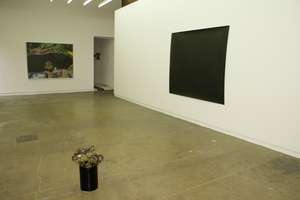
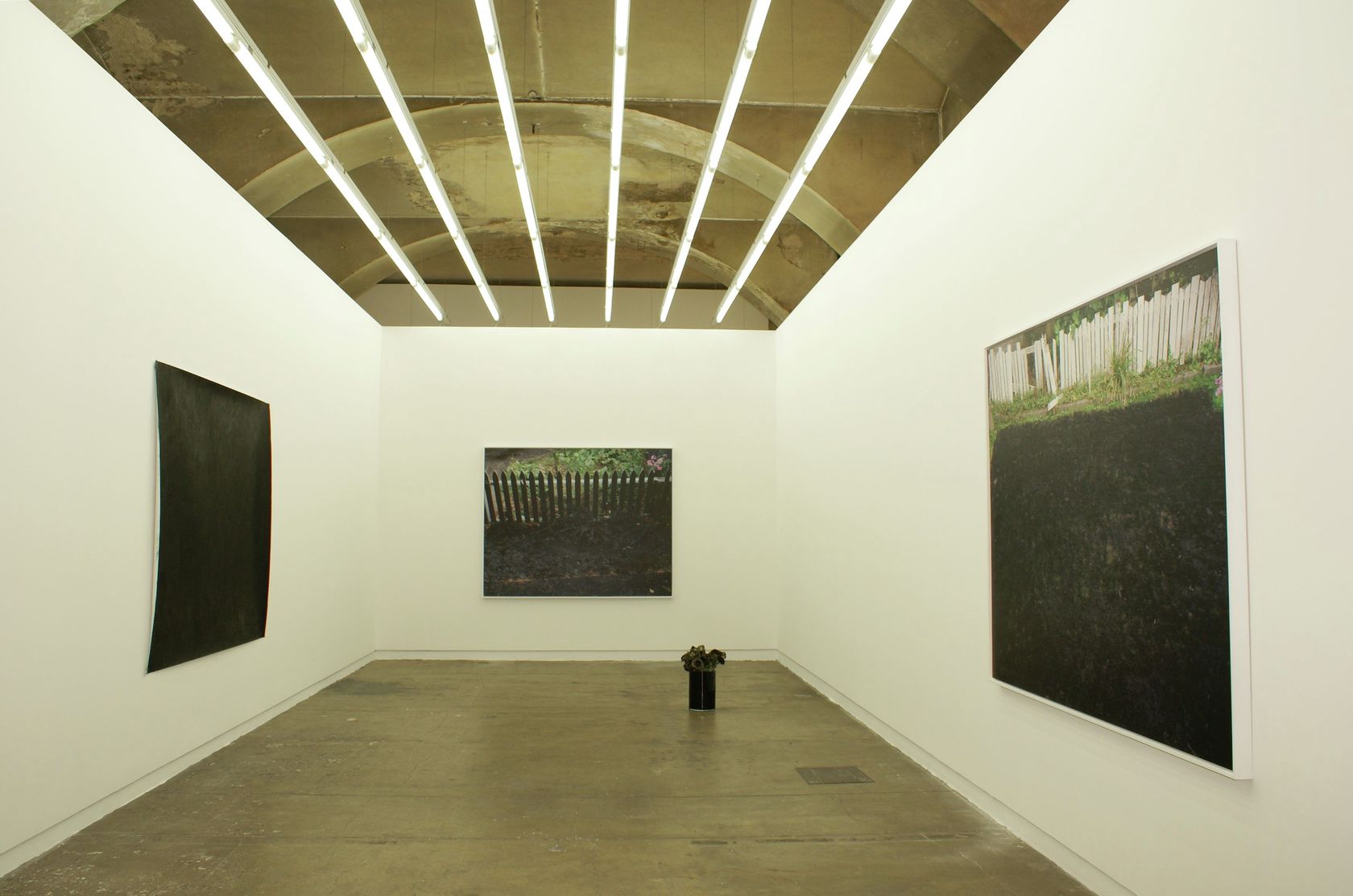
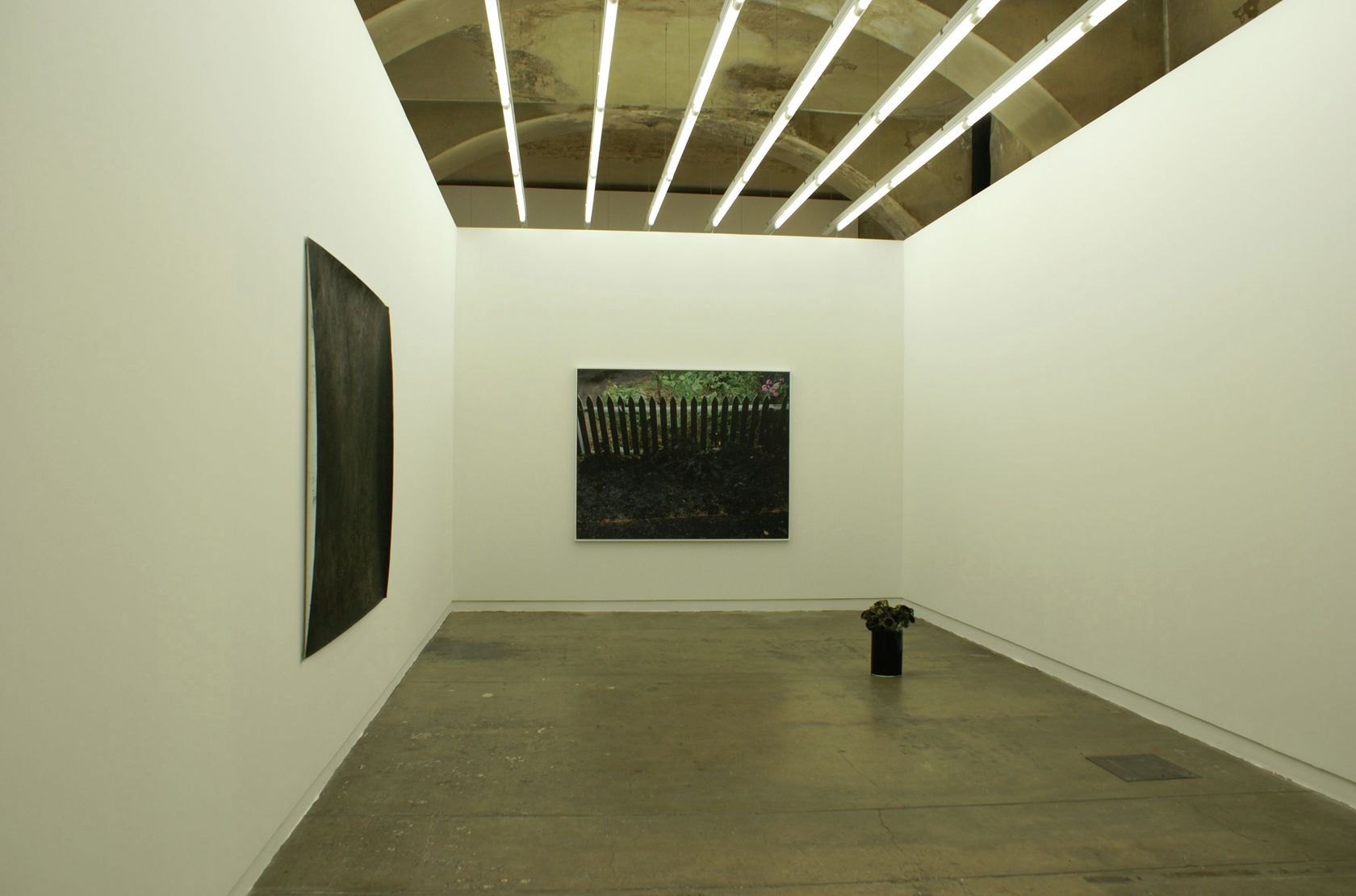
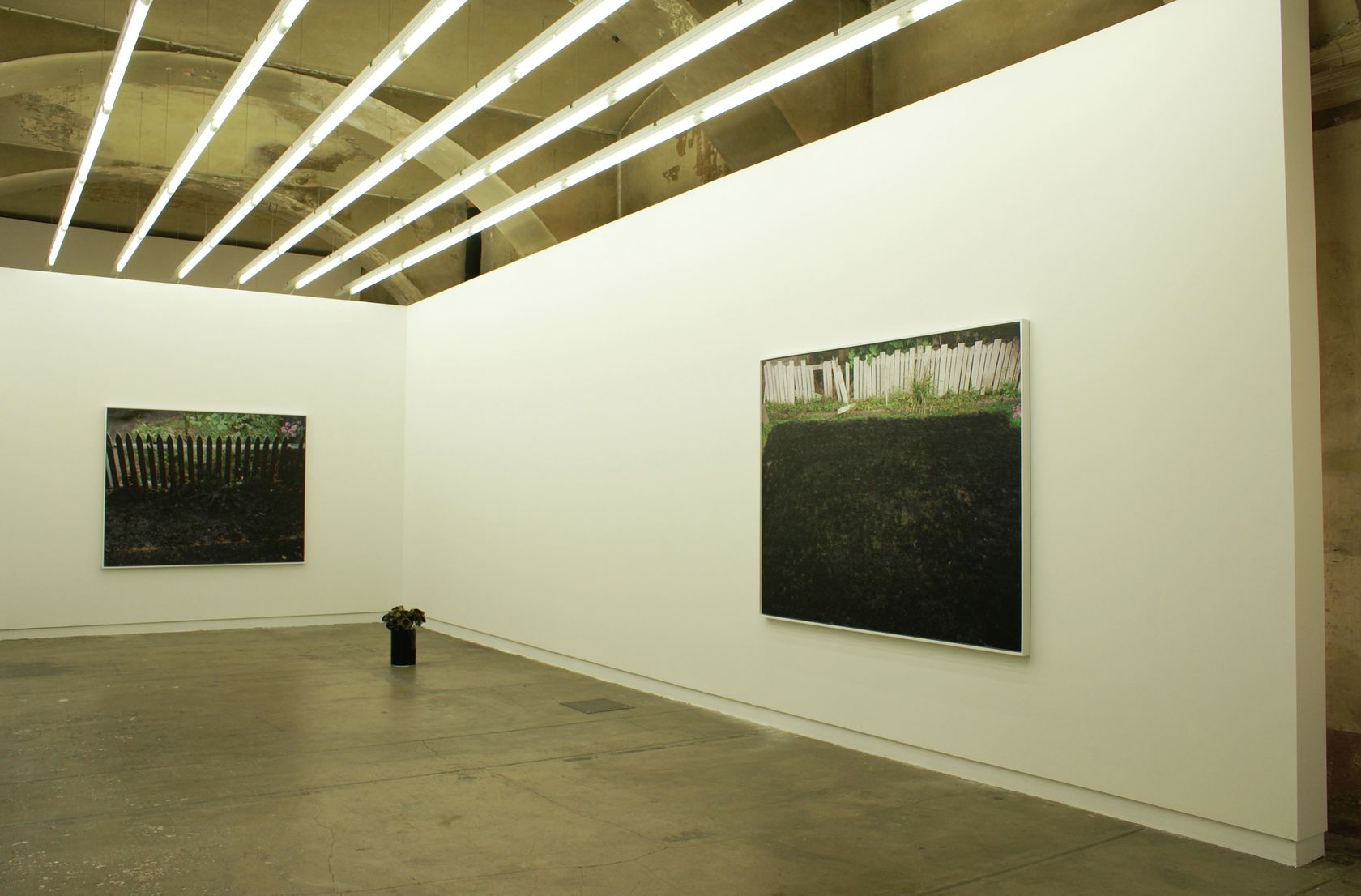
Galleria Franco Noero is pleased to present Andrew Dadson’s solo exhibition.
The artist works by means of different techniques. On this occasion, he realizes a few pieces turning out to be an observation on the use of the colour and on the painting seen from a different perspective.
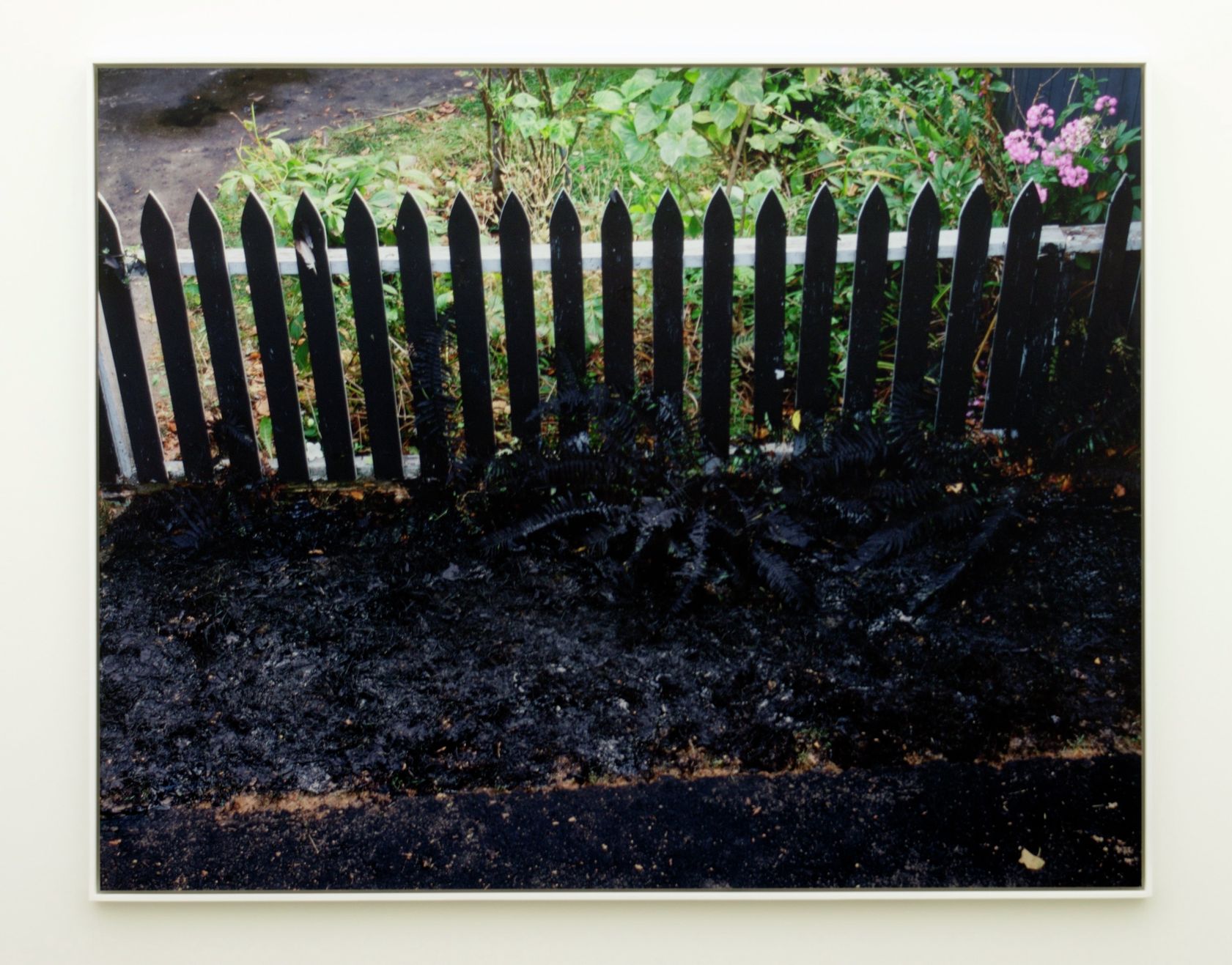
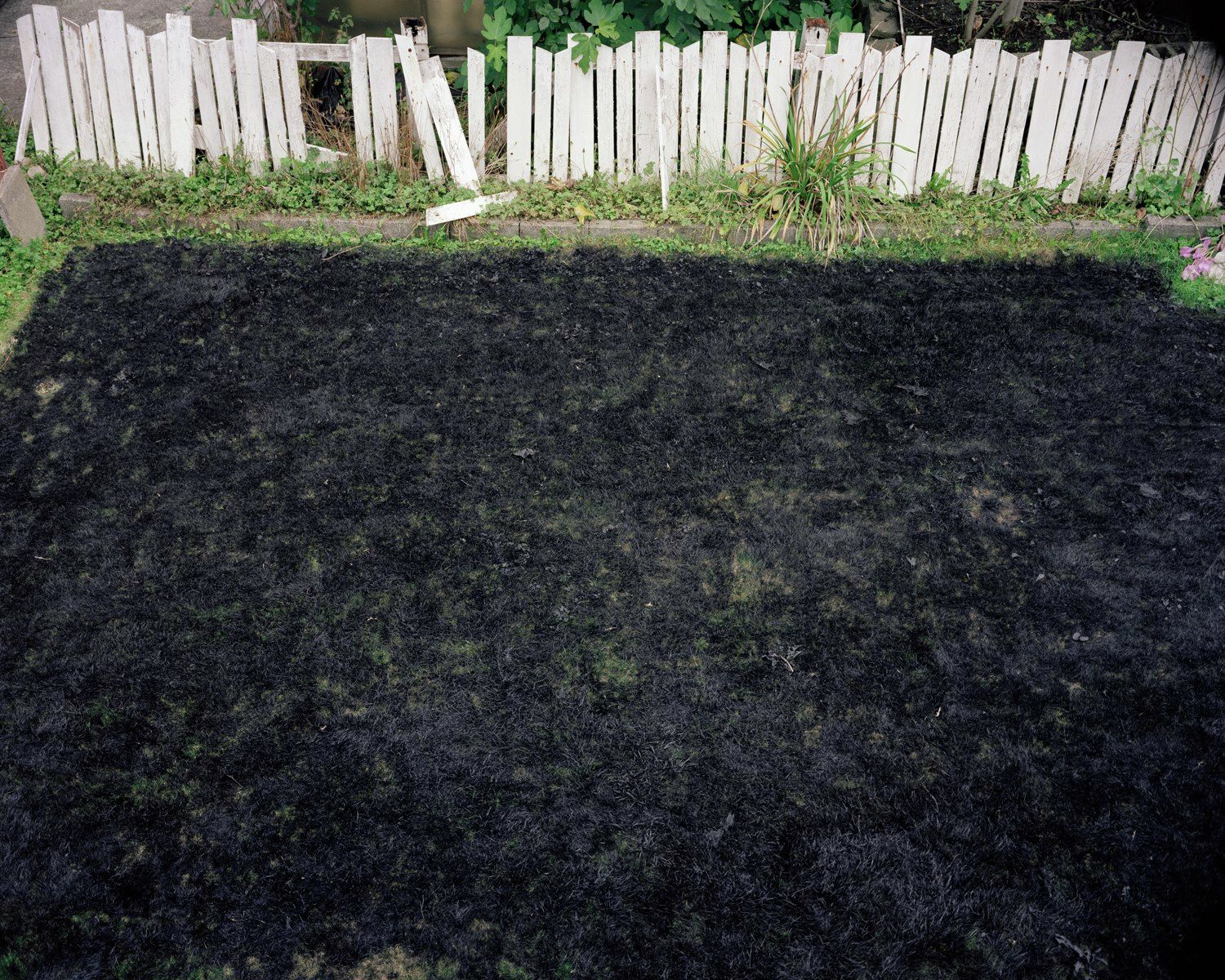
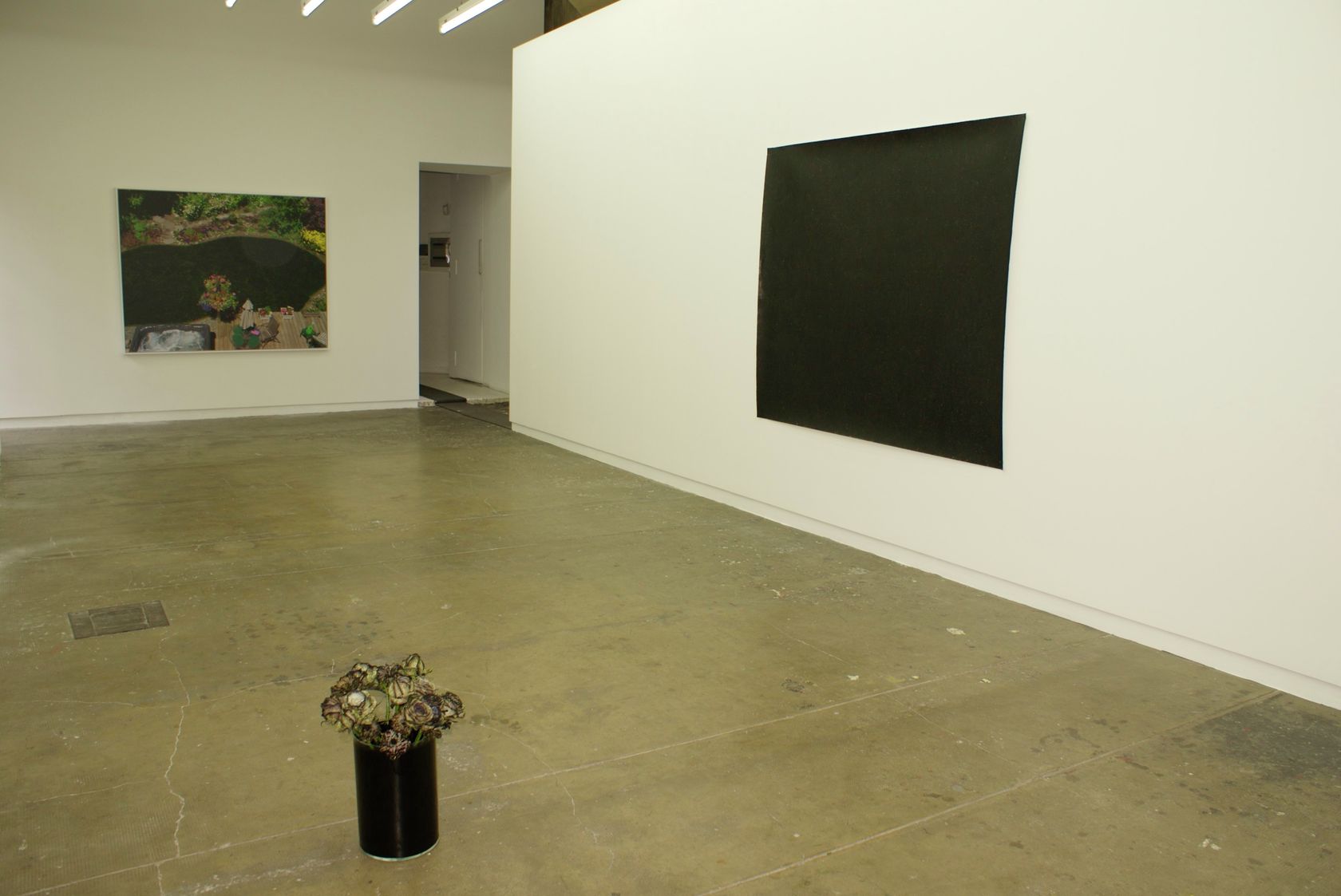
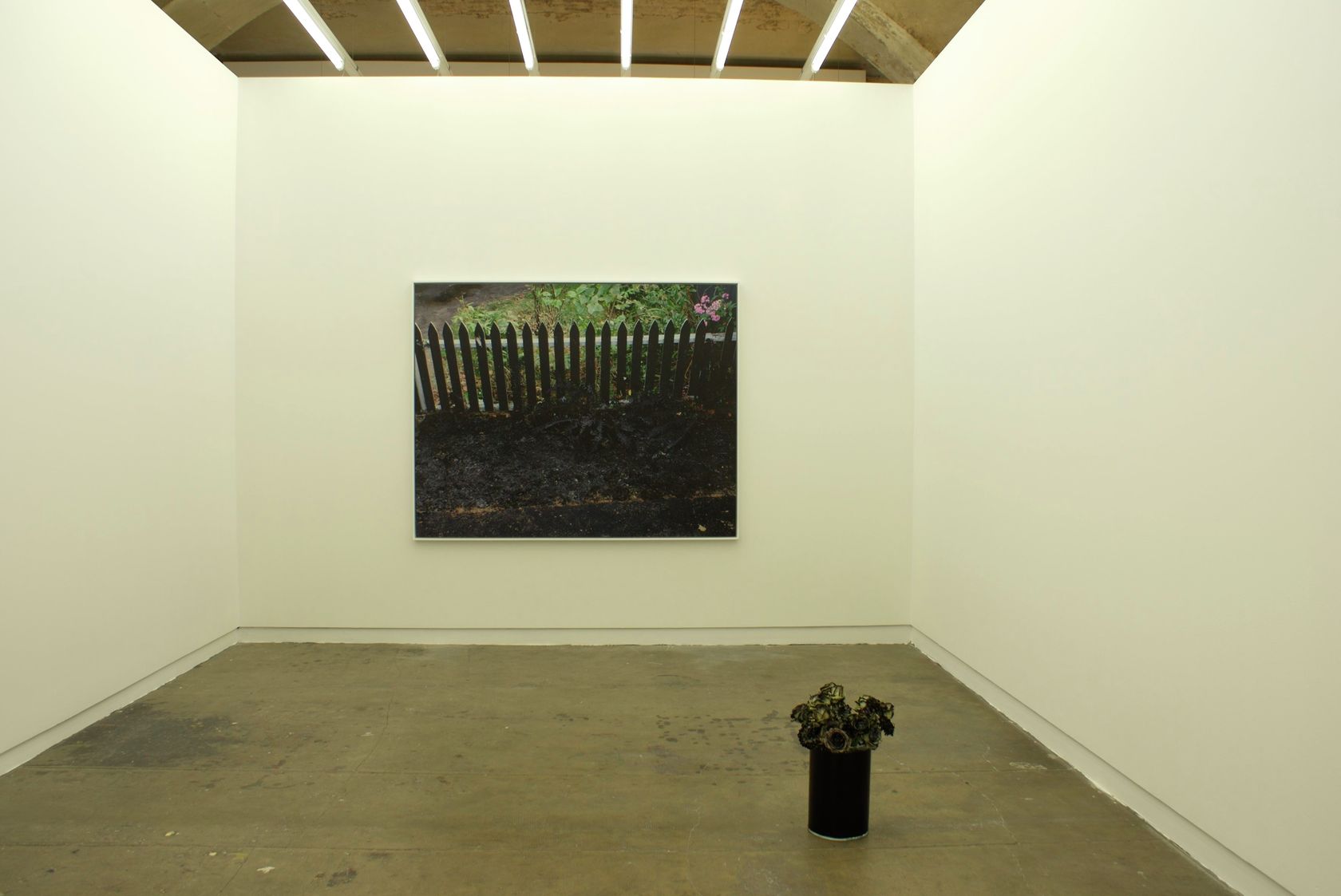
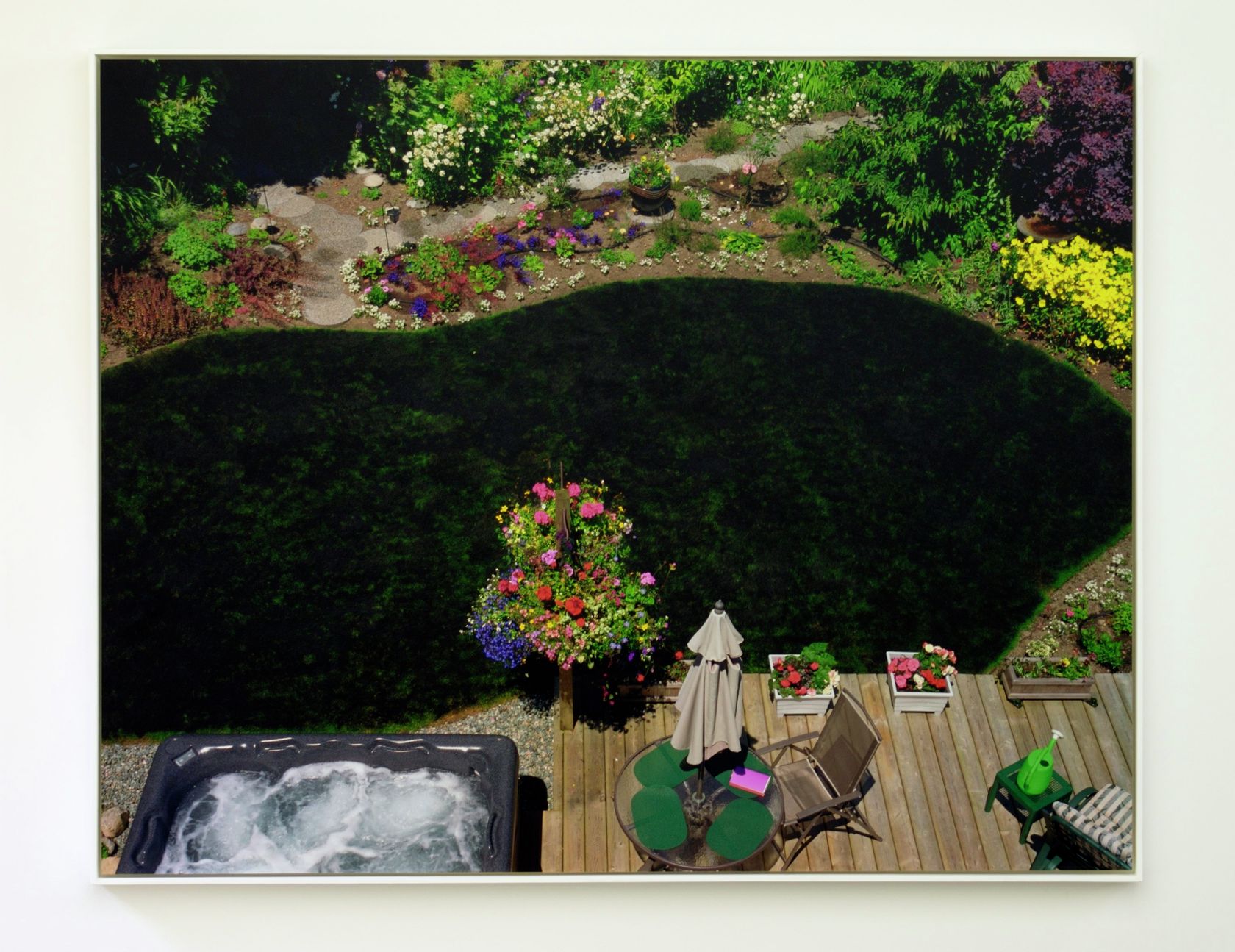
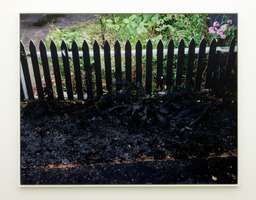
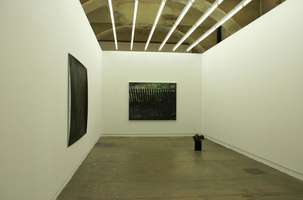
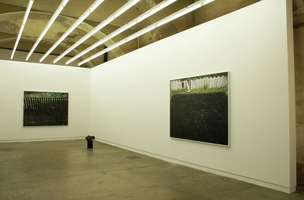
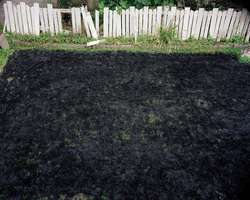
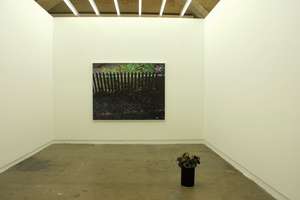
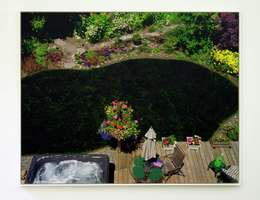
Three big-sized photographic pieces are part of the Black Lawn series. Here the artist paints in black and then photograph the grassy surface areas of the gardens of the suburban houses in the artist’s town, Vancouver. In this way the artist suggests a sense of annulment and depth, contrasting with the image contours, preserving the features and the colours of the place.
These photographic images are the occasion for overreading the great abstract American painting, and the work by artist such as Rauschenberg, Reinhardt and Rothko, offering the opportunity of working through the thin watermark of overlapping coloured coatings.
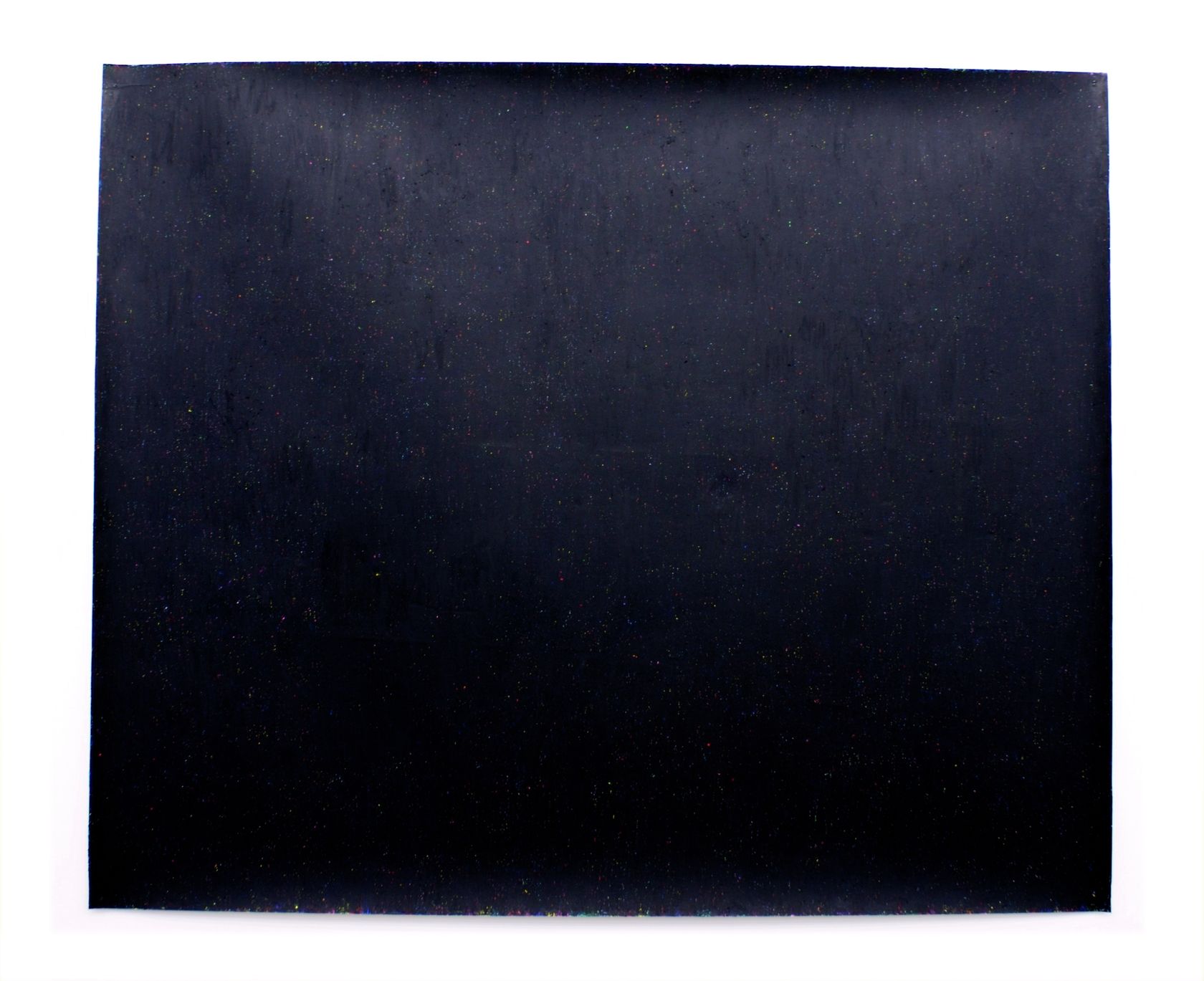
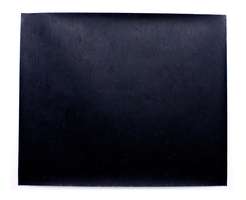
A big wax pastel drawing on paper reveals the same themes: the artist patiently intervenes on a texture of tiny squares, covering them through a black thick layer, using the last pastel of the box and leaving small traces of the colour beneath transpiring, playing with the tactile and almost sculpture qualities of the wax.
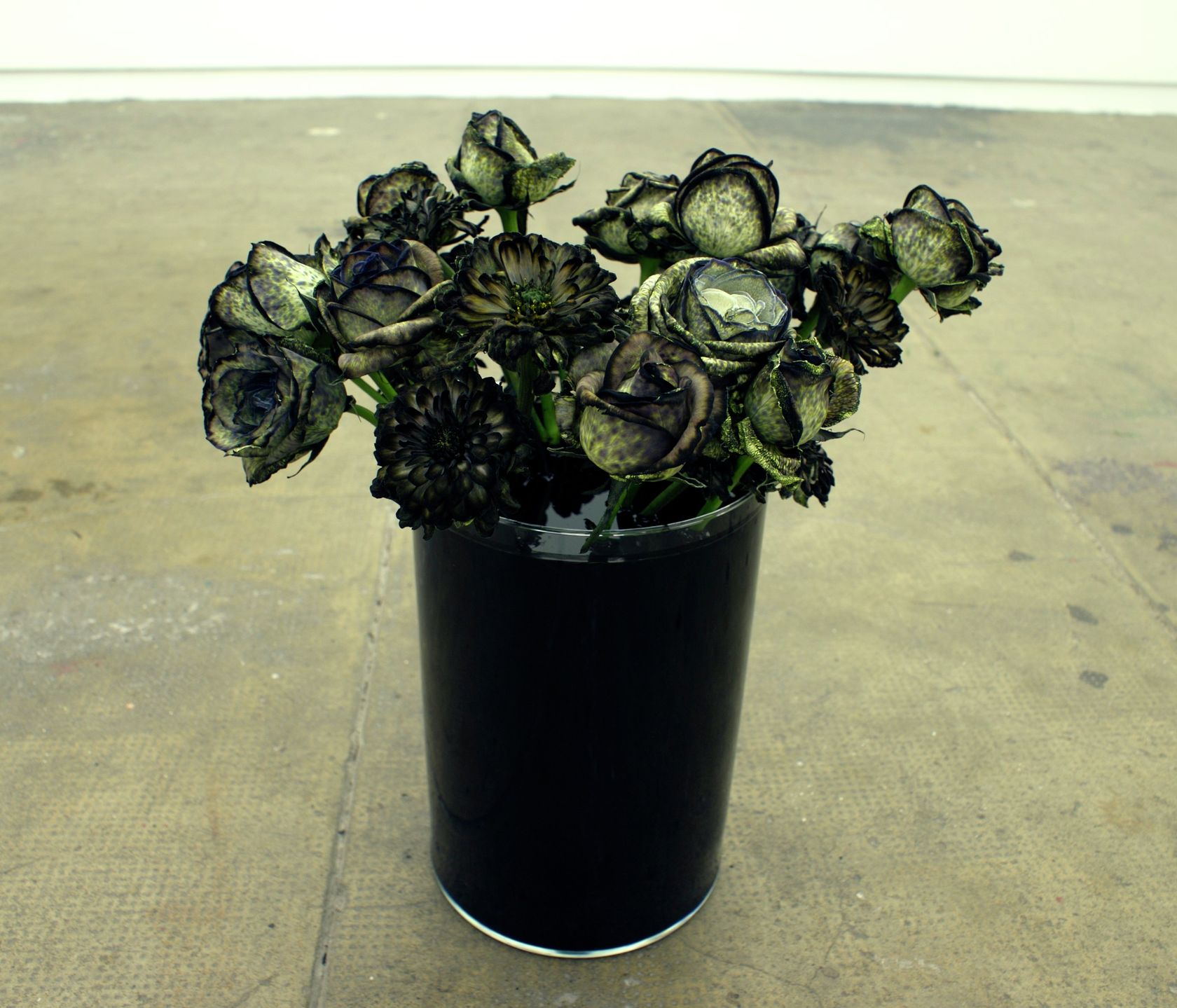
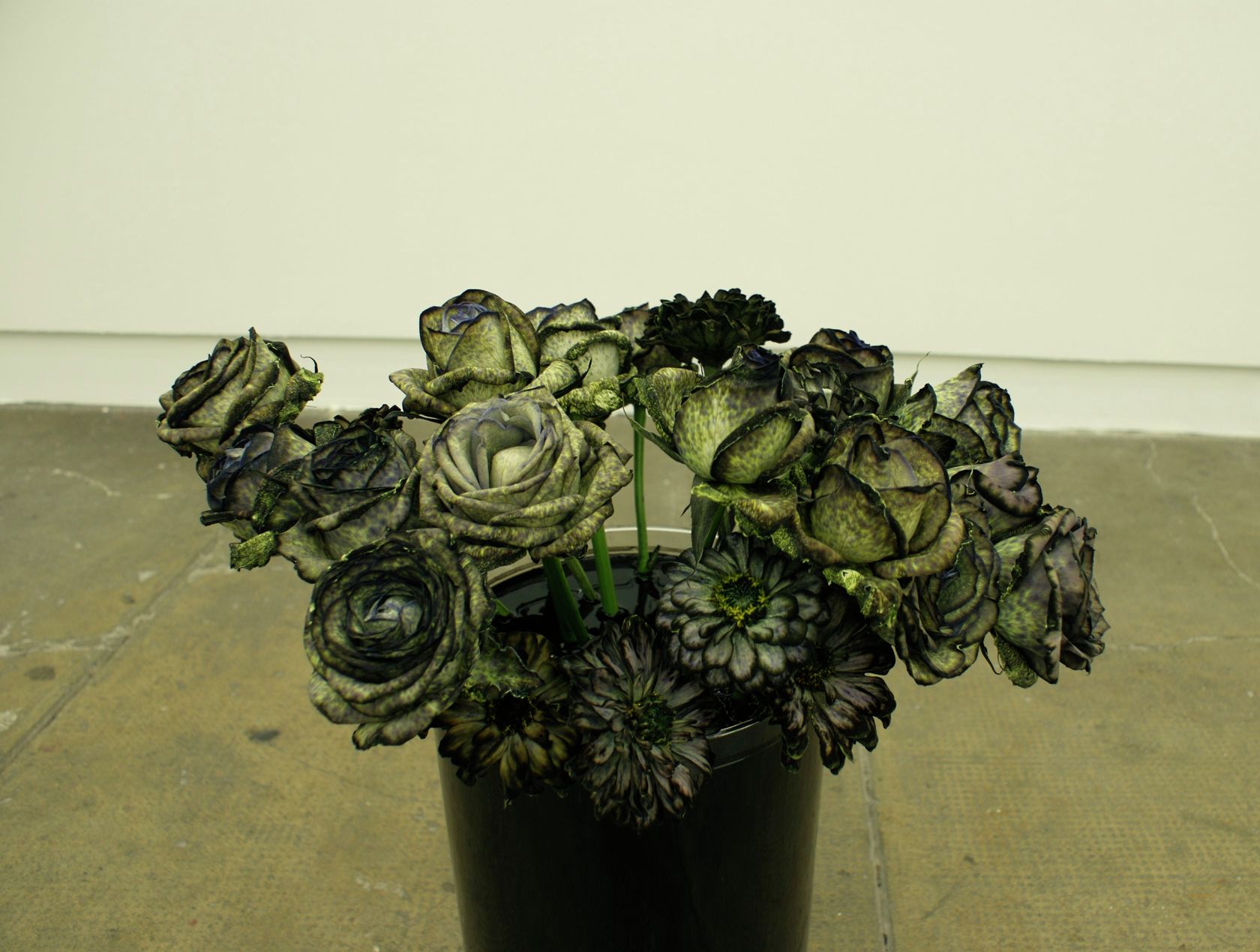
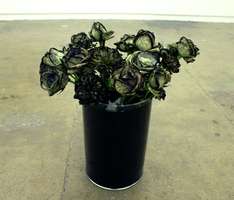
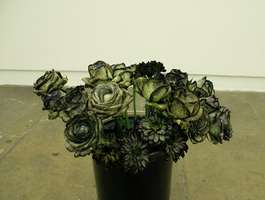
Should Love Come First borrows the title from a work by Rauschenberg, paying explicit homage to him: roses and dahlias have been treated in such a way to change their originally white colour to black, dipped in a solution through which the transparency of the glass flowerpot vanishes.
Like in the photographs the artist tries to add something to the existing, in a subtle and natural way, so to recreate the sense of reality and of shrewd perceptively displacements.