

-
Costa Vece, Heaven Can Wait – Installation view
-
Costa Vece, Heaven Can Wait – Installation view
-
Costa Vece, Heaven Can Wait – Installation view
-
Costa Vece, Heaven Can Wait – Installation view
-
Costa Vece, Heaven Can Wait – Installation view
-
Costa Vece, Heaven Can Wait – Installation view
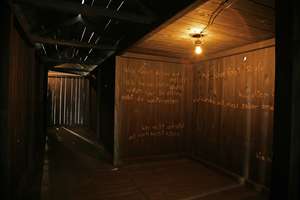
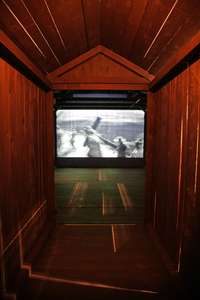
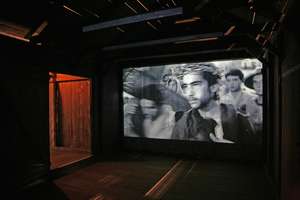
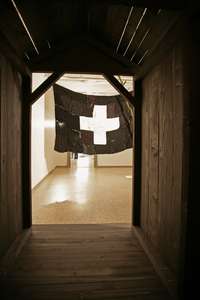
After a long stay and numerous exhibitions abroad, Costa Vece (*1969, lives and works in Berlin and Zurich) presents a new large-scale installation in a Swiss museum at the Kunstmuseum Solothurn. Since the 48th Venice Biennale in 1999, his works have attracted increasing national and international interest. Since the beginning of his artistic career, he has used worthless materials such as freight boxes, Euro pallets or oil drums. In mostly walk-in installations, he projects atmospheric sequences of powerful films that fascinate him. He combines images and associations that visualise the contradictions of the globalised world. The installations illustrate formulas of contemporary sensibilities. Costa Vece constructs ceilings of great emotionality and visual appeal.
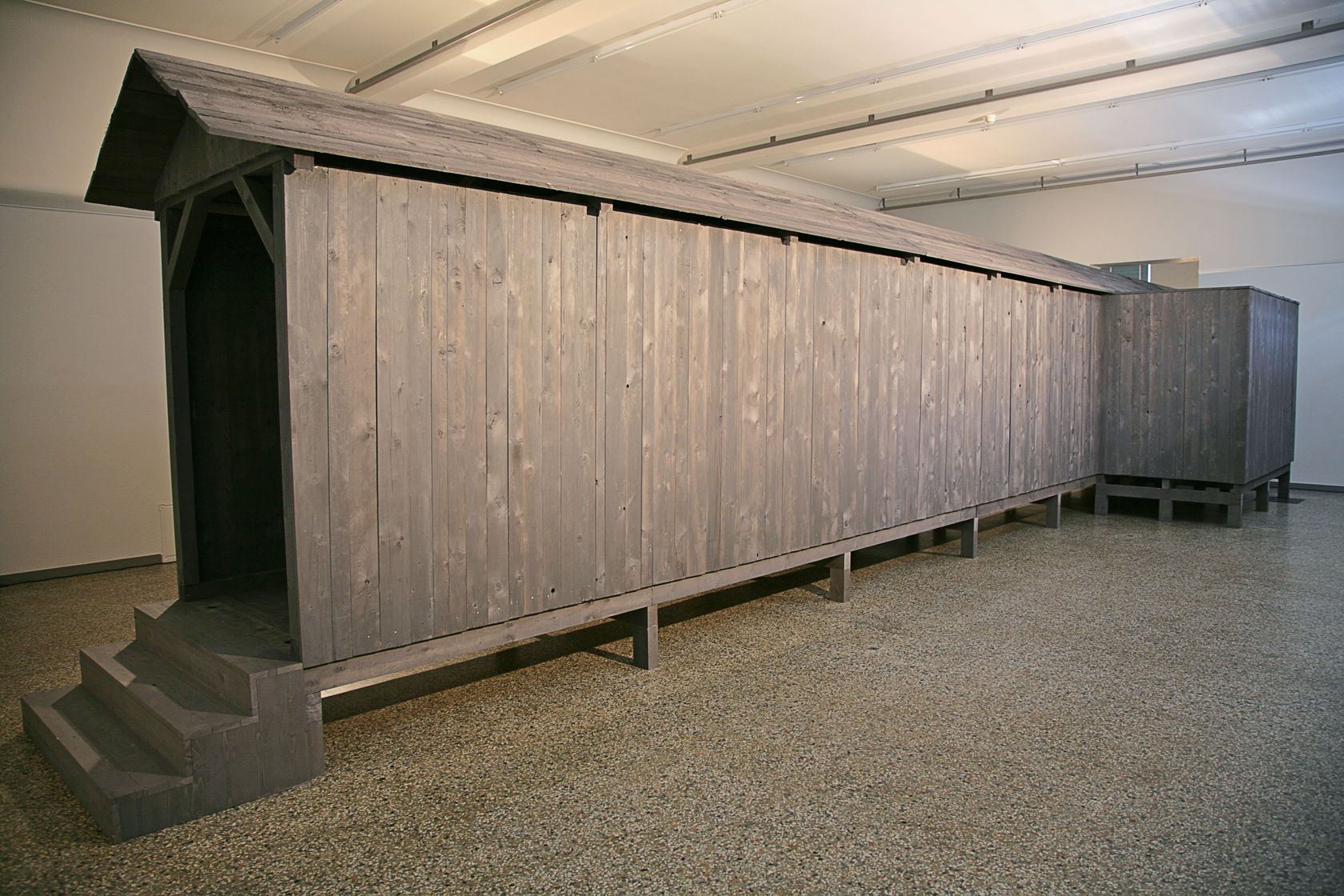
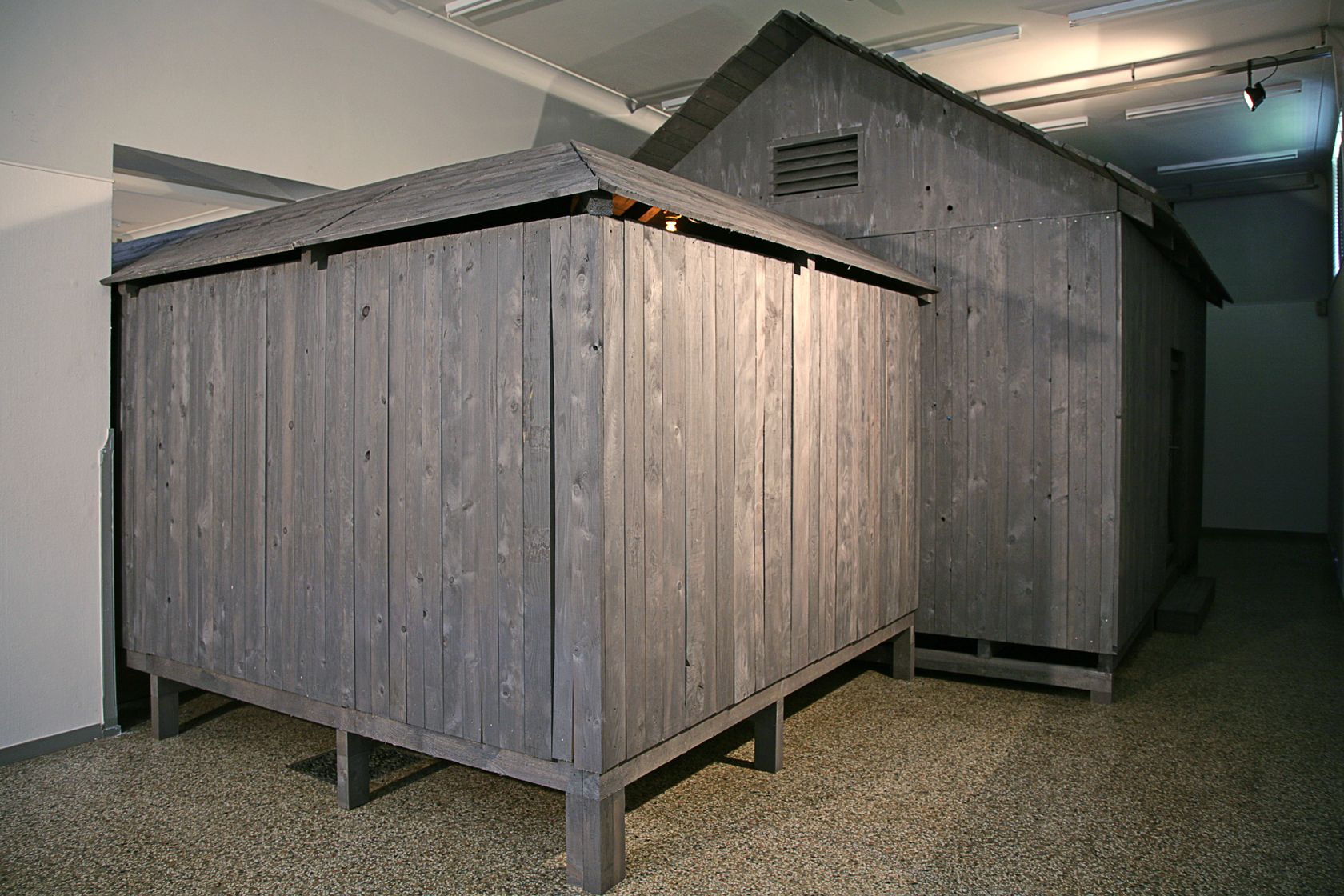
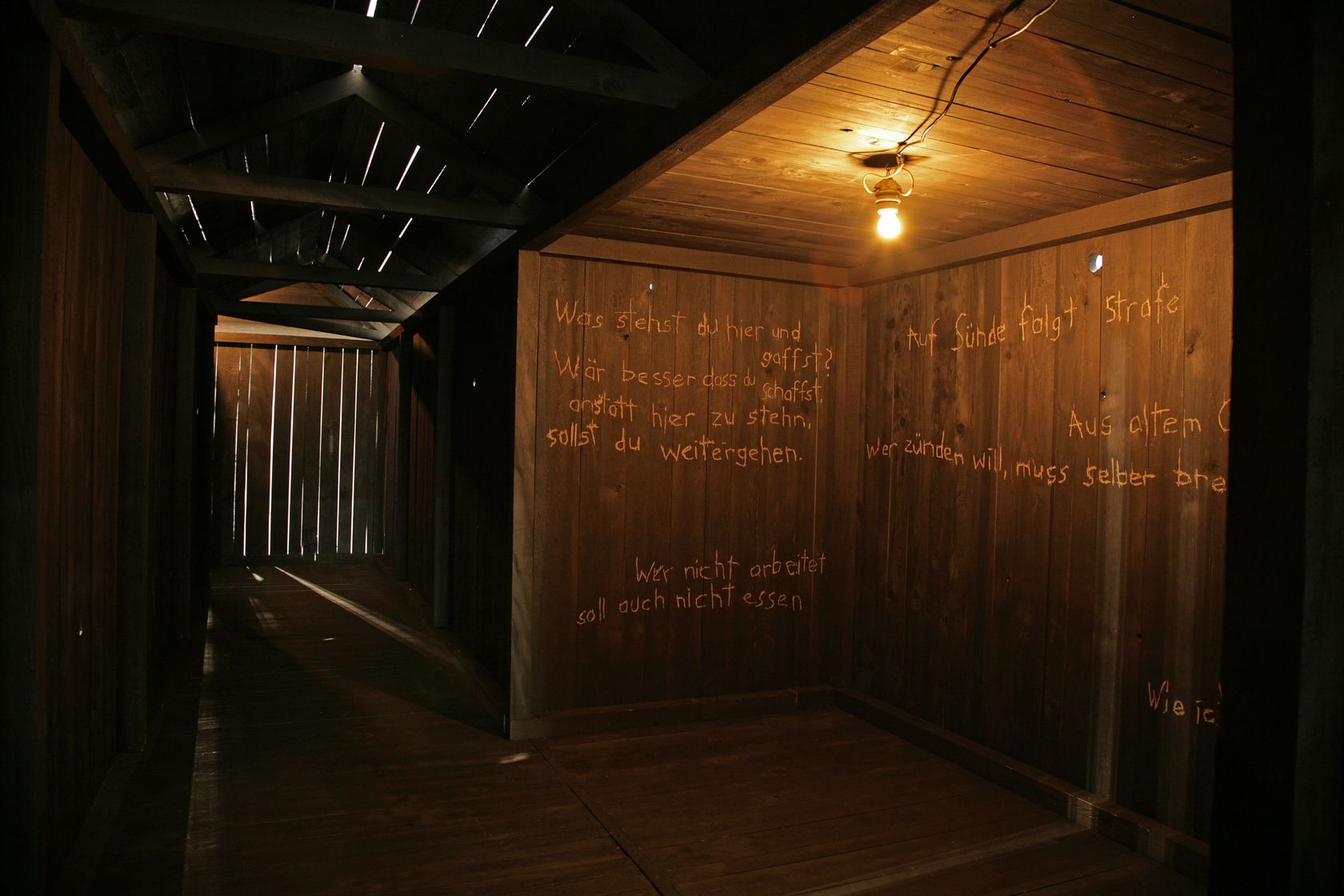
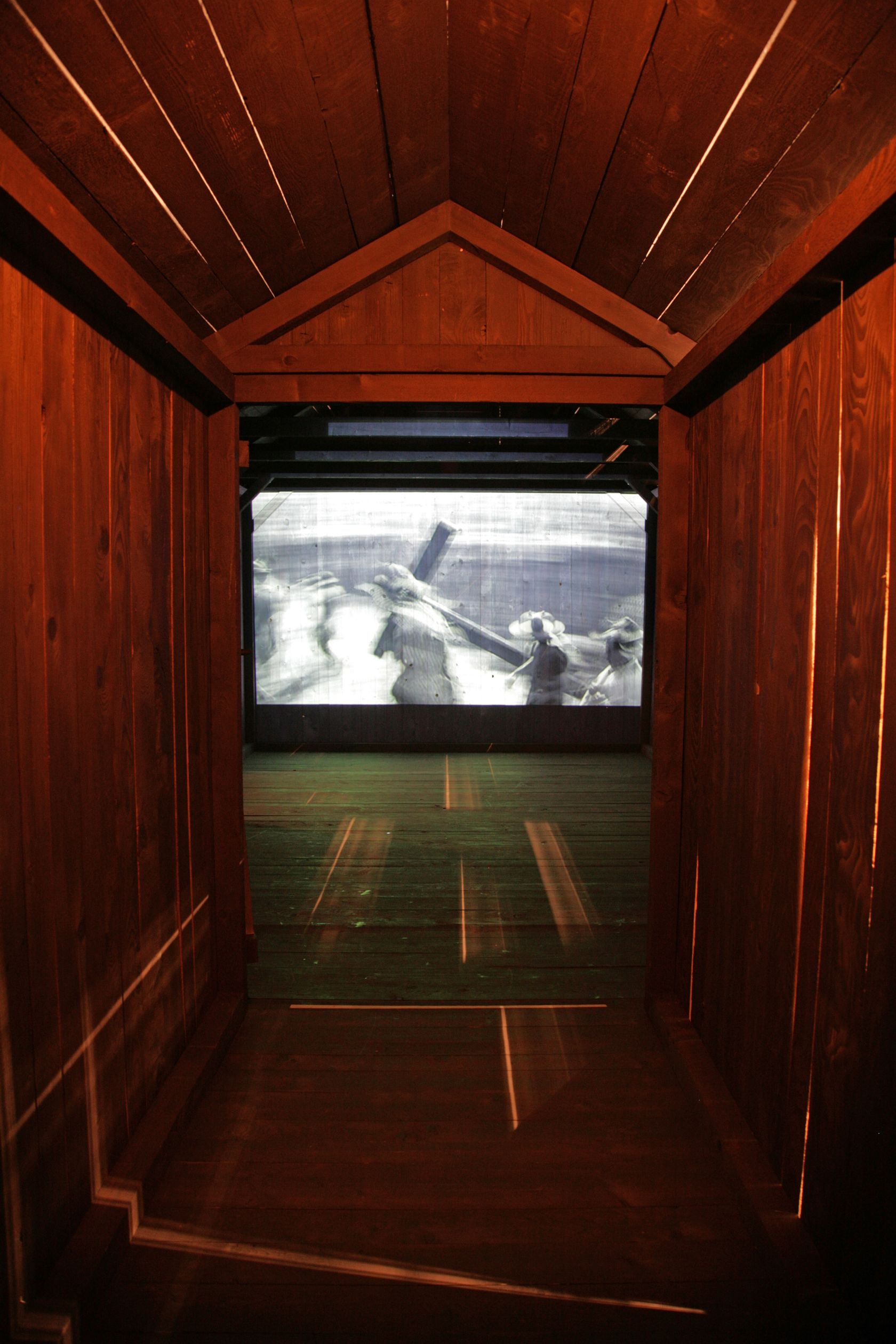
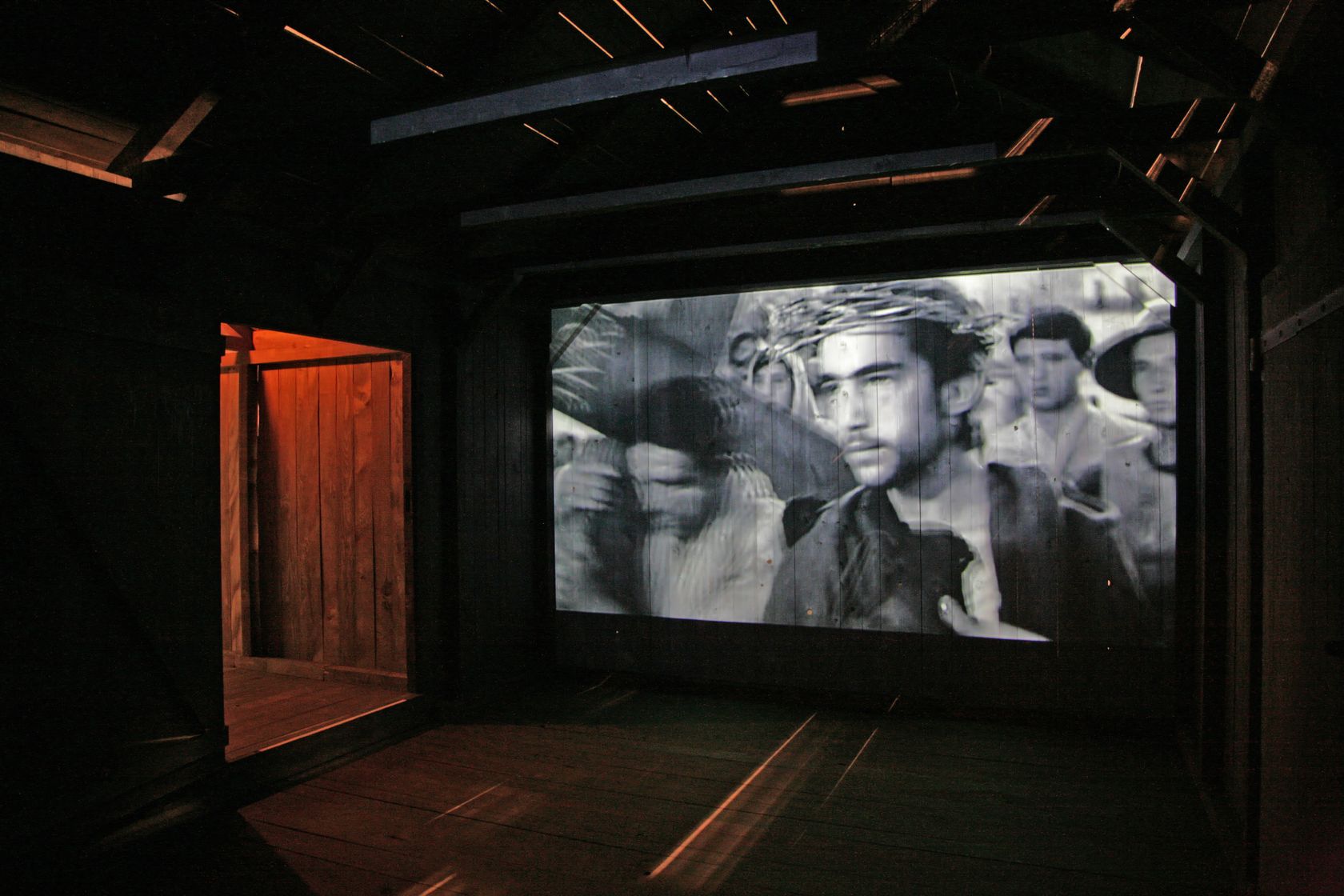
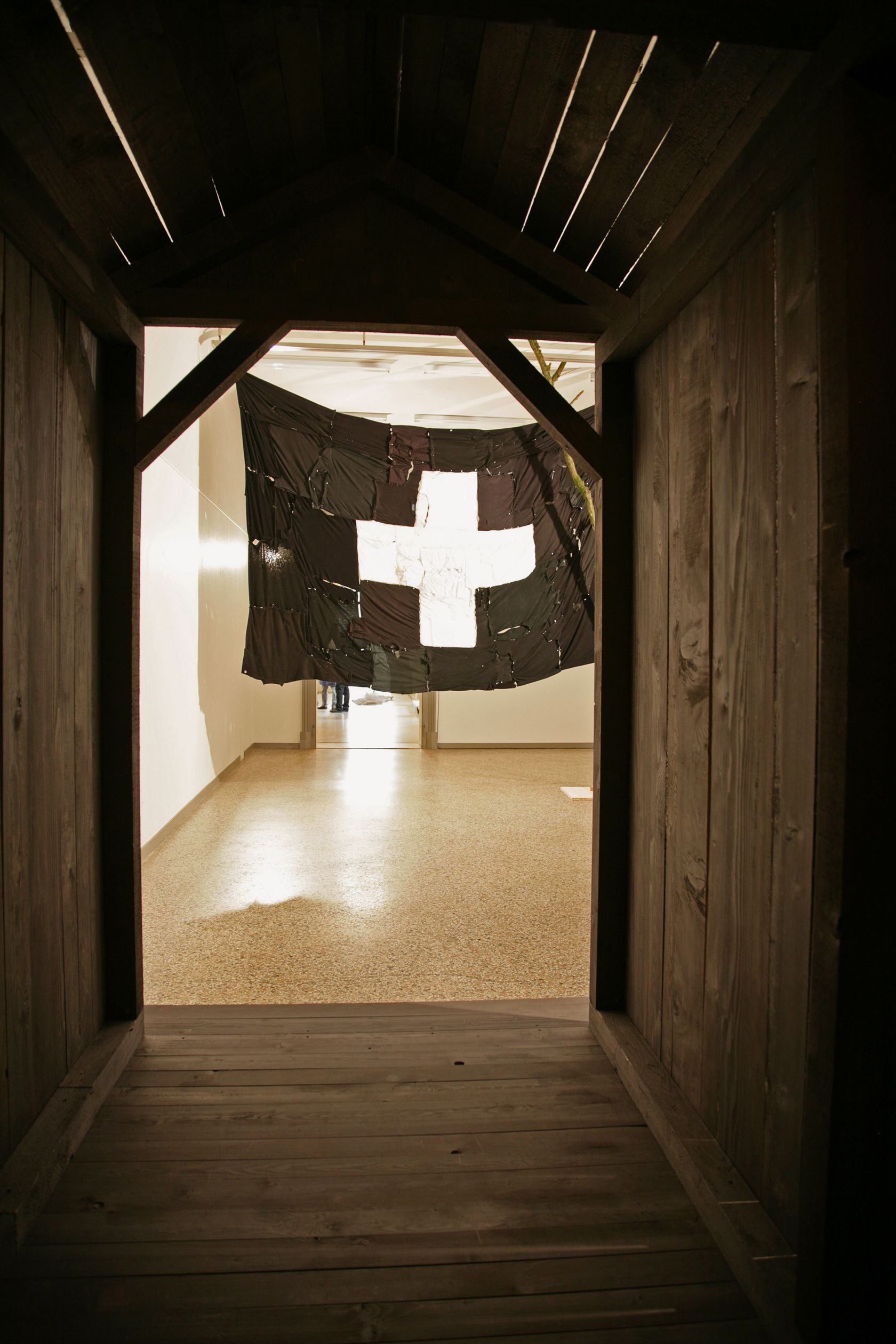
His latest installation at the Kunstmuseum Solothurn speaks of home and identity, morality and tradition. To this end, he combines different elements and symbols on different levels. A covered wooden bridge, as the artist knows from his childhood in Appenzell, leads through three rooms of the museum to a film scenario in an alpine hut. The bridges lead over abysses, rushing rivers or deep waters to distant shores. This is to be understood metaphorically. You are almost sucked into the narrow, mysterious passage of the bridge. Inside, the material wood becomes a metaphor for narrowness and depression. The gloomy corridor of the hut is lined with “chapels” in which one can see grimaces and moral sayings carved into the bread. They describe a life governed by the rules of society, tradition and customs take shape. Such moral dictates of society and religion can evoke feelings of claustrophobia and despair. Inside the hut, a clip from the film The Gospel According to St. Matthew (1964) by director Pier Paolo Pasolini (1922-75) is projected onto the rough wooden wall in an endless loop. Pasolini portrays Christ as a human revolutionary who fights against social injustice and is crucified as a stranger to it. The cross is repeated in the next room in a Swiss flag made of used clothing. By avoiding the symbolic red colour, the national symbol becomes an image of colourless melancholy. It represents the antagonism between individual history and the symbol of national identification and integration into a social system. The flag hangs lazily and heavily on the gnarled trunk of the tree, never being carried by the wind. The announcement of one's own “flag-waving” to the foreigner often goes hand in hand with a focus on one's own values. These can be oppressive not only to foreigners, but also to people in one's own country. The title Heaven Can Wait associates the idea of overcoming individual difficulties and social battles, which must be fought before salvation in the afterlife. At the same time, however, the title also conveys a relaxed postponement of the promise of salvation and a concentration on earthly pleasures. In this turn of events, there appears not only a hope for the liberation and emancipation of the individual, but also a certain lightness.
The installation shows a more recent socio-political aspect of Costa Vece's work, which has so far been rarely shown in Switzerland, and at the same time displays a variety of references to his earlier work. The seductive power of the image and music in the film and the dramaturgy of the staging contribute significantly to the atmospheric intensity of the installation. The attraction is spatial and emotional and evokes an oppressive mood. It draws attention to contemporary existential sensitivities. The work thus becomes a socially critical metaphor.
The catalogue entitled Dark Dayscollects excerpts from Costa Vece's private image archive, which feeds into his work. Photos collected from newspapers and the Internet, as well as reproductions of his and other artworks, provide an insight into the visual cosmos that characterises his work. The arrangement of the individual images reveals the thematic and structural overlaps of his thought and work. It testifies to his critical view of the world and at the same time reveals his great interest in typology and metaphor.